Monday, April 29, 2024

Make a statement with the best large indoor plants

large indoor house plants

It's a reasonably easy popular houseplant but does have a few quirks that need to be accepted if you want to grow a happy and healthy plant. Our write up article has information about all this if needed. It's a fairly thirsty plant, especially if kept in a relatively small pot like the one shown in the photo. This plant is over eight feet tall, and took about three years to get that size says Bill who sent in his photo. If space is limited, but you love the Monstera look, check out the next plant on my list for a perfect alternative. My list has a wide variety, from tall, wide and somewhere in-between, as well as several that will take different light conditions.

Best Large Indoor Plants for Making a Big Statement

Best indoor plants – 12 of the most versatile plants to suit any room in your home - Homes & Gardens

Best indoor plants – 12 of the most versatile plants to suit any room in your home.

Posted: Wed, 06 Mar 2024 08:00:00 GMT [source]

The plant care is easy and you don’t have to work much to keep it healthy and lush. They have big, deep-green leaves with a hinge of yellow in the centers and look like citrus plants. Olive trees have shiny silver leaves and would look amazing amidst your indoor green thumb. The olive fruit is edible and it can be pressed for oil which has healing properties. Beware, there are several varieties of olive and you must bring home European olive as they make one of the best houseplants.

Dwarf Cavendish Banana Tree

Fiddle-leaf figs are notoriously finicky, but if you give yours bright light and don't overwater it, it'll do just fine. Dust the large, dramatic leaves occasionally by wiping them with a soft, damp microfiber cloth. If you're looking for a large indoor plant that's sleek and okay with low light, the ZZ plant is your new best friend. It's super low maintenance since it barely needs to be watered, and it absolutely doesn't mind very low light levels. Spider plants have a reputation for being among the easiest plants to care for, making them popular with beginners and busy gardeners alike.

How and When to Fertilize Houseplants

large indoor house plants

But sometimes, all you want is just one or two large indoor plants in your home and that's cool too. If kept indoors, your Meyer lemon tree must be in the brightest part of your home. They love warm and humid climates and prefer well-drained soil.

large indoor house plants

Majesty palms aren't only luscious and full, but they're also pretty easy to care for. They can survive in lower light conditions, but they'll thrive in bright indirect light. Just be sure to keep the soil moist during the spring and summer months. Corn plants are some of the easiest houseplants to grow—and they do grow, to heights of 12 feet or more.

Variegated Pink Lemon Tree

Of course, those big houseplants are just a small sample of the many types of tall house plants you can grow indoors. Remember that tall houseplants don’t have to be the kind that stand on the floor or planters. Some great tall plants for indoors have long, trailing stems that hang elegantly from hanging baskets. When a long flowering plant is needed, the elegant phalaenopsis, or moth orchid, offers the solution. On a desk or table near bright, indirect light, they flower for weeks and sometimes months.

They love bright, indirect sunlight (at least six hours a day) and require constant misting during the spring and summer months. Often mistaken for a palm, the Ponytail Palm is actually a succulent. It is easy to care for, although slow-growing, earning it a place among easy large indoor plants. To care for Euphorbia cactus, plant it in a well draining potting soil and water only when the soil dries.

BEST INDOOR PLANTS FOR MEDIUM LIGHT

When watering, make sure the soil is thoroughly watered and the excess is allowed to drain off. It’s best to keep the plant on the dry side as wet soil can cause root rot. Always water your plants well and do not let the soil get soaked or dry completely. These plants are also tolerable to part shade/part sun and full sun. Bird of Paradise are tropical broad-leaved houseplants very common in many households. Feed your plants with any houseplant feed at normal strength not more than once a month during periods of active growth.

Australian Umbrella Tree

This is especially important for indoor plants with top-heavy growth or those with thin, weak stems. Stakes or plant supports can be used to provide stability and prevent the plant from bending or toppling over. Carefully insert the stake into the soil near the base of the plant and gently tie the stems to the stake using soft ties or plant clips. Be mindful not to tie too tightly, allowing the large houseplant room to grow and expand naturally. A few different plants in the Monstera family go by this common name.

A Madagascar dragon tree has a strong root system that ensures it remains tough through thicks and thins. Keep it in bright, indirect light and water it frequently with non-fluoridated water. They love to stay at room temperatures, it can tolerate lower temperatures, but that would affect its growth rate. While this needled tree may look like it's related to the pine tree, it's actually more closely related to an orchid. Norfolk pines love bright light and humidity, meaning they'll do best in a warm, south-facing window. To increase humidity around the tree, consider using a pebble plate, which is a shallow dish with pebbles and water in it, to keep the air moist.

It doesn’t climb or trail but instead has more of a clumping form. With green, bronze, or variegated leaves, the glossy foliage of rubber tree looks good in any room. With their long, strappy leaves, dracaena are striking plants with a strong, upright form.

Just know Croton's need bright light or indirect sunlight to retain their unusual and bold colors. Reverting to more basic dark green leaves if grown in darker areas. Schefflera is a well-known houseplant with typical foliage. It is easy to maintain, though, like all the other tall houseplants on this list, it requires a large pot to grow and exposure to bright indirect sunlight. Indoor banana trees are container plants with huge tropical broad leaves that make a dramatic statement in any office or room.

All monstera varieties prefer bright light but can adjust to lower light levels. The ideal conditions for the tall Australian umbrella tree are high sunlight and minimal watering. This tree can eventually grow up to 10 feet tall, so one day you can actually sit in the shade under its umbrella-like canopy. When you’re choosing a big indoor plant for your interior space, consider what types of textures you enjoy looking at. You also want to make sure that your indoor environment is a good fit for whatever plant you’re interested in. Moreover, consider whether you have the time and energy to care for a plant — a basic snake plant will be easier to maintain than a finicky fiddle-leaf fig.

Tolerant to poor lighting conditions, it makes for a great houseplant, thanks to its mini tree-like appearance. It is also on the list of NASA’s list of clean air plants and helps in removing formaldehyde and benzene from the air. Ficus are fascinating large indoor potted plants that are both easy to grow and maintain. According to one NASA study, they also improve indoor air quality.

I was also given another when I started a job in 2007 and I still have that one too. It's finally made it to the roof of the room and I know I'm going to have to prune it a little soon. You can read about my experiences with these plants over on my Dragon Tree guide. The Corn Plant or Dracaena Fragrans is called a False Palm because it looks like a Palm Tree. It's not a palm, but it is definitely a bold statement houseplant. Another classic, the Umbrella Plant (Schefflera) looks good in both traditional and modern design.

Sunday, April 28, 2024

The 10 Best Maid Cleaning Services in Los Angeles, CA 2024

house cleaners in my area

On time, courteous, respectful of me working from the house. Diana is by far, the best home cleaner we have ever had. She is friendly, thorough, and always on time. Liberty got all we requested and more done. I’m so happy and pleased with her service. We refer the best domestic workers in the business.

This common cleaning mistake can release poisonous gas into your home in seconds - Yahoo News

This common cleaning mistake can release poisonous gas into your home in seconds.

Posted: Thu, 26 Jan 2023 08:00:00 GMT [source]

Why Hire A Referral House Cleaning Agency in Los Angeles?

You can even call/text us and we’ll do it for you! Our entire goal is to make finding an awesome cleaner as SIMPLE AND HASSLE-FREE as possible. Maggy Maid’s success in the home cleaning industry in Los Angeles is no fluke. Unlike other house cleaning agencies serving Los Angeles and its surrounding areas, Maggy Maid boasts a uniquely covetable reputation and satisfaction guarantee.

Full-service Deep Cleaning Service in Los Angeles, California

house cleaners in my area

Compare the quotes you receive, taking into account the scope of services offered and their pricing. Our professional team is dedicated to providing top-notch cleaning solutions for a spotless home. With Maggy Maid Los Angeles, you can trust that your cleaning needs will be met with utmost care and attention to detail. Experience the difference today and discover why Maggy Maid Los Angeles is the trusted choice for homeowners.

Top 10 House Cleaners near Los Angeles, CA

April was very professional she cleaned my house so well I was completely amazed. Thank you April your services are greatly appreciated. Some household items, like your draws and fans gather dust with time. You allow professionals to use it with the right cleaning equipment. They know the types of chemical to be used for different household item. Using wrong cleaning chemicals can be dangerous.

She did all the cleaning I expected. I love her spirit and she is very efficient and so friendly. Erica is definitely an asset to he homeaglow family. She is professional, personable, and love her job.

Maid Cleaning Services Cost Guide

We go the extra mile to find only the most qualified and trustworthy pros, and make sure you receive the best professional house cleaning services you’ve ever seen. Los Angeles is a busy place, which probably means you live a busy lifestyle. If you are like most people in the region, it’s likely you don’t get much joy from having to handle your house cleaning responsibilities.

Housekeepers or maids are hired to lightly clean and maintain certain aspects of the home. This might include dusting, washing dishes, changing sheets, doing some meal preparation and restocking the client’s groceries and personal care products. Norman was great - arrived and listened to my preferences, started work immediately. He did and excellent job with the specific areas that needed cleaning; he’s very polite, efficient and thorough. Fredia works hard and does an amazing job every time!! So much so that she is going to be repeatedly booked for myself and my family.

house cleaners in my area

If she lived closer, it would be great to use her more, but a very long haul for her. We came home to a clean house with our laundry folded. She gave me back my sanity after not being able to clean due to pregnancy. Milledge is wonderful but your organization is horrible. Your communication process is very poor. Now you are charging me for 3 hours when he was here just 2 hours.

She was thorough and my house actually smells like it's been cleaned. Showed up on time and was very thorough. Did a good job and is very friendly. Juliana was available to clean without me being present and did an excellent job at directions via text. She is very efficient, she impressed me by leaving my home super clean. Lorena did a fantastic job for me this morning.

She quickly did the work without delaying. Asks if there is anything specific I want her attention on, cleaning is thoroughly covered. She was very quick very professional left the house smelling wonderful. Floors are so clean and furniture is polished! Hasn't looked this nice in a long time. Not only does Natasha and Bill do an amazing job, but we know we can trust them.

Amy and her crew came to my house for the first time today. They are fast, careful, and skilled. I will be scheduling them for my bi-weekly cleaning sessions. Before finalizing your decision, verify the credentials of the cleaning company. Ensure they are licensed, insured, and bonded. This provides protection for you and the cleaning staff in case of accidents or damages during the cleaning process.

What’s more is our referred maids can be booked at very feasible rates compared to other professional cleaning agencies in Los Angeles. Domestic cleaning service is becoming very important to the lives of many households, especially those who abhor living in a clustered house. Professional house cleaning deploys special equipment in keeping the house clean. Depending on the type of cleaning job involved, professionals often use such cleaning equipment like vacuums, brushes, dustpan and so on. Living in Los Angeles can be a really stressful lifestyle, let us help you keep your home clean and relieve some of that stress. Your referred professional house cleaners can get any dirty job done in a very efficient manner.

She pays attention to detail and does a thorough job. Super friendly, very efficient works very quickly and did a thorough cleaning job of my apartment. I will definitely hire her again.

My house smells good and looks even better. My daughter, grandson & husband were home and she was beyond courteous & kind to them while continuing to work hard in our home. Neylin was very well-organized and friendly. She arrived well -prepared, with her own tools and work materials.

Saturday, April 27, 2024

Aerodynamics of Airfoil Sections Introduction to Aerospace Flight Vehicles

airfoil design

For example, one direct method is to assume a candidate shape--perhaps from a database of previous designs--and make adjustments to the shape based on pressure calculations until the performance desired is obtained. There are also inverse methods where a target pressure distribution is defined and an objective function is created. Then, optimization methods can be applied until the actual and target are within some acceptable range of tolerance with each other. If you have ever seen the US Air Force Thunderbirds, shown in the figure above, you are aware of the amazing aerial maneuvers they perform. Planes that perform acrobatic flying like this are equipped with symmetrical airfoils. These airfoils have no camber, which means no difference in pressure and therefore no aerodynamic lift is created, as oncoming airstreams separate at the leading edge for purely horizontal or perpendicular flight.

A Complete Guide to Airfoil Shape Considerations

Notice the increase in the lift coefficient for a given angle of attack with increasing Mach number but to a point. The slower and aircraft flies, the higher the lift coefficient required to keep the aircraft in the air. Slower flying speeds result in a lower dynamic pressure and therefore a higher lift coefficient is required in order to produce sufficient lift equal to the aircraft weight. The maximum lift coefficient is produced just before the aircraft stalls; after which any increase in the angle of attack will reduced the lift produced and decrease drag. Any airfoil designed to have laminar flow for low drag must have a smooth skin. Any significant roughness or excrescences on the wing surface will trip the laminar boundary layer, causing it to become turbulent and greatly increasing drag.

Center of Pressure

Conceptually, defines how important viscous forces are with respect to the inertia of the flow. Here, density, , free-stream velocity, , a length scale (typically chord), , and dynamic viscosity, , all relate to this nondimensional number. Thus, using either of the two methods, it is shown that the pressure below the wing ishigher than the pressure above the wing. This pressure difference results in an upwardlifting force on the wing, allowing the airplane to fly in the air. As shown in Figure 4, the starting vortex rotates in a counter-clockwise direction.

Controlling Lift:

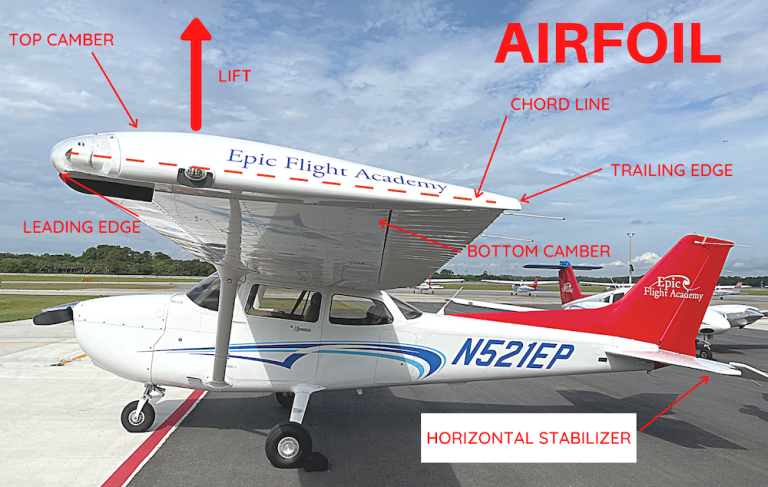
If you compare the C210 to the CH-750 you should immediately pick up that the Cessna airfoil is considerably thinner than that of the CH-750. The C210 makes use of a NACA 2412 airfoil at the root (later models used a NACA 64A-415) which is a fairly conventional airfoil profile with a maximum camber of 2% of the chord located at 40% of the chord. After reading the post on wing area and aspect ratio, you should appreciate that there exists a very clear relationship between the size (weight) of the aircraft and the size of the wing (wing area) required to operate the aircraft as intended. Flown at a high angle of attack, flat-bottomed wings are probably the simplest to make but can perform fairly poorly. First, let’s recall that a flow with Circulation is not the same as a flow with rotation.

They are typical of airfoil characteristics found in various standard catalogs, e.g., Abbott & Von Doenhoff. The results are often shown with respect to variations of the chord-based Reynolds number and/or the free-stream Mach number. Conversely, as the air above decompresses and joins with the air flowing from beneath the airfoil, lift decreases. In addition to the climbing required for takeoff, airfoil shapes for most aircraft must be designed to maintain elevation for long distances.

Today, it is possible to predict the aerodynamic characteristics of airfoils with a high confidence level using several popular computer codes, such as XFoil, which are freely available in the public domain. The classic approach to increasing the drag divergence Mach number is reducing wing thickness, i.e., thickness-to-chord ratio. However, this has several other disadvantages, including less fuel tank capacity and higher structural weight for the same strength and stiffness. Supercritical airfoils were initially studied in the 1950s by Herbert Pearcey at NPL in England and refined during the 1960s by Richard Whitcomb at NACA. Today, supercritical airfoils are used on nearly all commercial jet aircraft, allowing them to cruise at higher flight Mach numbers between 08 and 0.85.

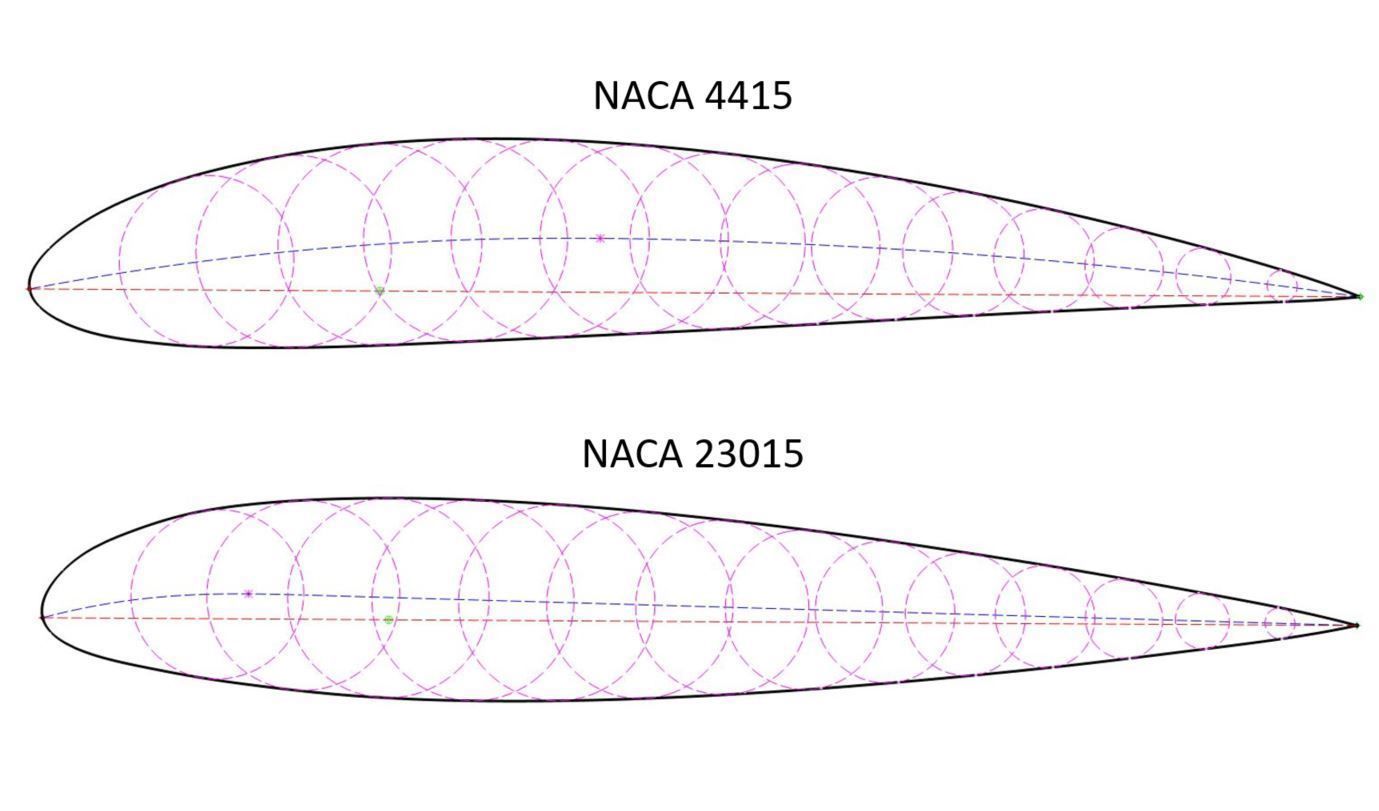
NACA Method of Drawing Airfoil Shapes

airfoil design

A representative pressure coefficient distribution around an airfoil in transonic flow is shown in the figure below. Notice in this case that the region of supersonic flow over the leading edge region produces a more uniform low pressure terminated by an abrupt pressure recovery, a classic signature indicative of the presence of a shock wave. This outcome contrasts with the subsonic flow, where the lowest pressure value is much closer to the leading edge, giving an adverse pressure gradient over most of the chord. The steep adverse pressure gradient near the shock wave makes the boundary layer much more prone to local thickening and often produces flow separation, i.e., the onset of shock-induced separation.

Connection to Aerodynamic Characteristics

Rotational flows are described by viscous forces and imply the fluid elements rotate, see for example this link. In the later example in the link are two flows that both have circulation (as the flows rotate like a tornado, hurricane, or vortex), but only one is rotational (where the fluid elements themselves rotate). Circulation is a feature relevant to vortices, and via Kutta-Jukowski, is why line-vortices are critical for lift generaton in potential flow.

airfoil design

Deep learning based multistage method for inverse design of supercritical airfoil - ScienceDirect.com

Deep learning based multistage method for inverse design of supercritical airfoil.

Posted: Thu, 16 Sep 2021 20:23:25 GMT [source]

For airfoils with small camber, i.e., small values of surface slope angle , applying the thickness along the axis is a reasonable approximation. Caution should also be exercised to ensure the correct signs (positive or negative) are used. Still, there are exceptions, especially for airfoils with large thickness-to-chord ratios or large amounts of nose camber. The validity of the Glauert rule generally extends up to the critical Mach number for the airfoil section, , i.e., the onset of supercritical flow.

This work led to organizing the results into families of airfoils known to produce specific aerodynamic characteristics. With a catalog of airfoils with measured aerodynamic characteristics, aircraft designers could quickly choose the most appropriate airfoil profile for their particular application. Sir George Cayley, often revered as the “Father of Aeronautics,” delineated the problem of sustentation, i.e., aerodynamic lift, from that of drag, i.e., the component of aerodynamic resistance. Cayley obtained the profile shown in the drawing below by measuring the cross-sectional shape of a trout, which, interestingly enough, conforms closely to modern low-drag “laminar” airfoil sections. Historically, the most suitable airfoils for most practical engineering applications were obtained through an evolutionary process.

Design and experiment of concentrated flexibility-based variable camber morphing wing - ScienceDirect.com

Design and experiment of concentrated flexibility-based variable camber morphing wing.

Posted: Tue, 25 May 2021 19:31:14 GMT [source]

In addition, the leading-edge shape of the airfoil is often defined geometrically in terms of a nose radius, which also affects the airfoil’s aerodynamic characteristics. The problem of defining the airfoil pressure distribution for an airfoil with thickness and arbitrary shape was tackled by Theodorsen & Garrick in the early 1930s. The design of practical airfoil profiles was further aided by methods such as the conformal transformation first developed by Prandtl & Tietjens. This latter approach made it possible to compute pressure distributions and the resulting lift and pitching moment characteristics of some specially shaped “Joukowski” airfoils. The aerodynamic properties of Joukowski airfoils were measured in wind tunnel tests starting in the late 1920s at Gottingen in Germany and by the NACA in the U.S.A. from 1930 onward.

While dimensional values forces (lb or N) and moments (ft-lb or N-m) are helpful in many forms of analysis, it is far more convenient to work with non-dimensional aerodynamic quantities, such as lift and drag coefficients. “NACA airfoils are mid-loaded,” he explained, meaning the lift is evenly distributed across the chord, which leaves the front end susceptible to airflow separation at high angles of attack. As a result, the NACA airfoils “have an unnecessarily high see-sub-m.” The initial camber angle at the nose of the NACA airfoils contributes to airflow separation and, consequently, the high pitching moments. To correct this problem, Riblett moved the loading forward and changed the initial camber angle to 12 degrees. As a result, all of his airfoils are soft-stall airfoils and there is no leading edge separation at high angles of attack. This latter goal is achieved using camberlines that produce a more uniform pressure loading from the leading edge to a distance .

House Cleaning Services Los Angeles, CA Housekeeping & Professional Cleaners

house cleaners in my area

They offer sharper prices than you'll find anywhere else. Even if you do not want to keep your place tidy because of what others would say or do, it is good for your health and well being of your family members. To be healthy, it is recommended that you live in a healthy environment and such environment must start from the place you live. He is very kind and polite, my house smells really good.

Why Hire A Referral House Cleaning Agency in Los Angeles?

Amy and her crew came to my house for the first time today. They are fast, careful, and skilled. I will be scheduling them for my bi-weekly cleaning sessions. Before finalizing your decision, verify the credentials of the cleaning company. Ensure they are licensed, insured, and bonded. This provides protection for you and the cleaning staff in case of accidents or damages during the cleaning process.

Cost

If she lived closer, it would be great to use her more, but a very long haul for her. We came home to a clean house with our laundry folded. She gave me back my sanity after not being able to clean due to pregnancy. Milledge is wonderful but your organization is horrible. Your communication process is very poor. Now you are charging me for 3 hours when he was here just 2 hours.

How much should you tip maids or cleaning services?

Only 2% of applicants get chosen to be on our cleaning company system. Yes, you read that correctly, 2%!! This is NOT an Uber-type service where just anyone can sign up. Our cleaning company has a lengthy interview process to make sure you get only the BEST house cleaners near you, period.

Why should I trust Molly Maid?

He is very thorough and very honest. He does not need to be hand-held. Heather was great and worked very hard to achieve a great job. I liked her very much, she was very nice and accomplished a lot.

Our service area

house cleaners in my area

You can even call/text us and we’ll do it for you! Our entire goal is to make finding an awesome cleaner as SIMPLE AND HASSLE-FREE as possible. Maggy Maid’s success in the home cleaning industry in Los Angeles is no fluke. Unlike other house cleaning agencies serving Los Angeles and its surrounding areas, Maggy Maid boasts a uniquely covetable reputation and satisfaction guarantee.

The national average cost for house cleaning ranges between $25 and $50 per hour, per cleaner. However, the cost of house cleaning services near you might be different. Molly Maid understands how easily schedules and responsibilities can change.

Holiday tipping guide 2023: Who should you tip and how much? - Care.com

Holiday tipping guide 2023: Who should you tip and how much?.

Posted: Fri, 17 Nov 2023 08:00:00 GMT [source]

Some companies charge a set amount — such as 5 cents — per square foot, with a minimum amount, such as $100. You may save money by increasing the frequency of your house cleaning visits. Often a company will charge you less per cleaning when you schedule more cleanings per month. The cost advantage rewards your loyalty, and also reflects the fact that more frequent cleanings make it easier to maintain a high level of cleanliness in your home.

How to find the best house cleaning services in Los Angeles?

You only pay for the type of house cleaning that you want. Be that as it may, you can optimize your cleaning plan and adapt the level and duration of cleaning to your preferences and needs. The bottom line is that it is entirely up to you to customize your checklist and appointment frequency.

I hope that I may have Raysheena as my regular cleaner. I appreciate that she does not need to drive very far to get to Alameda. Easily rebook the same great cleaner, or try another. Homeaglow gives you direct contact with your cleaner. Pick from a big range of cleaners.

There are different reasons to use professional cleaners. It appears that the most important reason is to ensure that the home is spotless. Because Molly Maid is a part of the Neighborly team of service professionals, our services are backed by the Neighborly Done Right Promise™. If you're not satisfied with our maid cleaning services, contact us within 24 business hours, and we'll make it right. Although some house cleaning and housekeeping duties might overlap, a house cleaner is charged with the top-to-bottom cleaning of a home. House cleaner duties typically include basic and deep house cleaning, such as washing and sanitizing countertops, floors, tubs, toilets, kitchens and more.

She was thorough and my house actually smells like it's been cleaned. Showed up on time and was very thorough. Did a good job and is very friendly. Juliana was available to clean without me being present and did an excellent job at directions via text. She is very efficient, she impressed me by leaving my home super clean. Lorena did a fantastic job for me this morning.

Chapter 5: Theory of Airfoil Lift Aerodynamics Intermediate Aerodynamic Theory and Analysis

airfoil design

The CLMAX of the wing in takeoff configuration and the wing loading define the stall speed in that configuration. That stall speed in turn is one of the major parameters determining takeoff distance. It’s rare that takeoff distance sizes the wing, particularly if the wing is sized to meet stall speed requirements in landing configuration, but it does happen, particularly for an airplane with a purely cruise-optimized wing. The airfoil characteristics will still come into play because the flaps are rarely full span and because flaps tend to produce a constant increment in max lift. That said, the CLMAX value that counts is for the wing with the flaps down, and that is what should be used to evaluate the wing’s maximum lift and set wing loading. The first step is to determine the lift coefficient (CL) of the wing at cruise conditions.

Symmetrical Airfoils and Their Applications

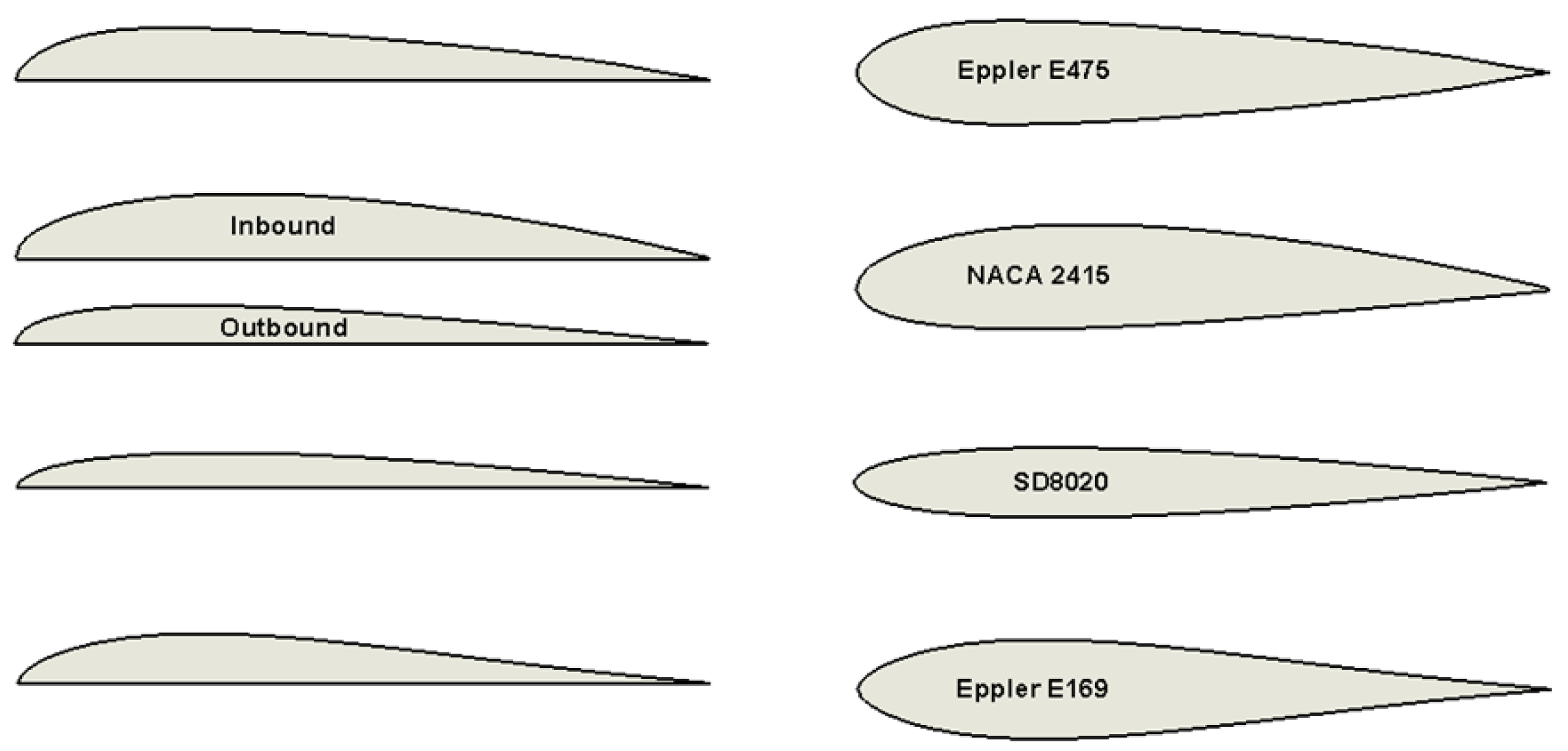
Let’s look at all three airfoils next to one another before diving into the airfoil engineering principles used to select each one for the aircraft considered. Let’s break down the main categories to give you a better idea of which airfoil is right for your airplane. Riblett’s book—GA Airfoils—represents a lifetime worth of work improving and tweaking the NACA airfoils. You can tell a creative mind by its doodles—and Riblett thought much about aircraft design.

Sling High Wing

Even with these attributes, symmetrical wings are far less common than non-symmetrical or cambered airfoils. A significant problem with thin supersonic airfoils is that at low (subsonic) flow flight speeds, they tend to produce leading-edge flow separation and stall even at moderate angles of attack. Therefore, many aircraft that employ supersonic airfoils must use high-lift devices for takeoff and landing, such as large leading-edge slats along the entire wing. Another method is drooping the leading edge using camber, which maintains the supersonic performance while markedly improving low-speed characteristics. Nevertheless, supersonic aircraft have relatively high takeoff and landing speeds and may need drogue parachutes to reduce their landing distances. As the angle of attack increases further, the boundary layer thickens, and the aerodynamic characteristics start to become non-linear with respect to the angle of attack.

Center of Pressure

Therefore, it is possible to mimic two-dimensional wings theoretically and experimentally, deriving a better understanding of the aerodynamics of the airfoil section by itself. Comparing this airfoil to the modified NACA of the CH-705 reveals a profile that produces less drag as it's thinner and more streamlined. The airfoil is also less cambered than the NACA which means it produces less lift for a given angle of attack when compared to the CH-750 airfoil. This results in a longer takeoff run as the aircraft needs to be at a higher speed to produce sufficient lift to get airborne.

Invertible neural network tool helps optimize airfoil design - Tech Xplore

Invertible neural network tool helps optimize airfoil design.

Posted: Thu, 26 Oct 2023 07:00:00 GMT [source]

While the preceding flow visualization images are interesting and of much value, the resulting forces and moments on the airfoil are also important. The effects of the Mach number and, hence, the compressibility of the flow on the lift curve are shown in the figure below. Typically, flow with a Mach number lower than 0.3 is considered incompressible, and an airfoil will have a lift-curve slope of about per radian or 0.11 per degree. Nevertheless, it can be seen that the lift-curve slope increases quickly at the higher Mach numbers because of the effects of compressibility. Notice also that the maximum lift of the airfoil decreases with increasing Mach number.

A reinforcement learning approach to airfoil shape optimization Scientific Reports - Nature.com

A reinforcement learning approach to airfoil shape optimization Scientific Reports.

Posted: Fri, 16 Jun 2023 07:00:00 GMT [source]

Maximum lift, pitch moment, drag coefficient, and even airfoil dimensions are changed with just a mouse click and drag. As with landing, it is important to do the evaluation with the flaps in the proper configuration. Most single-engine airplanes take off with the flaps up because they have acceptable takeoff distance and lower drag in this configuration. Regulations vary, so the stall speed must be evaluated in the proper configuration. For example, in the U.S., a single-engine airplane certified under FAR Part 23 is required to have a stall speed no greater than 61 knots in the landing configuration. Landing configuration in this context can include deflected flaps or other high-lift devices.

Often, the moment curve has a shallow positive slope because the aerodynamic center (defined later) is close to but just forward of the 1/4-chord. It should be appreciated that the flow over any wing of finite span will be inherently three-dimensional and further complicated by the effects of the vortices that trail behind the wing, as shown in the figure below. The presence of these vortices produces a downwash flow over the wing, affecting the local angles of attack over the entire wing and, therefore, its lift and overall aerodynamic characteristics. The flow can be assumed nominally two-dimensional only at sections well away from the wing tip vortices. What the graph does show though is that the F-16 is most efficient at high speeds where the lift coefficient is low (high speeds).

Drag Characteristics

The subscripts 1 and 2 indicate different points along the same streamlineof fluid flow. The following presents two of several ways to show that there is a lower pressure abovethe wing than below. Where would be the number of points on the upper surface and would be the number of points on the lower surface, the idea being shown in the figure below. The process can also be performed in MATLAB by using the polyfit function. The linear least-squares method is a numerical process of finding a straight line that best represents the trends shown in a particular data set.

This would result in poor low speed flying characteristics (high stall speed and long takeoff roll) if this wing profile was used on either the C210 or CH-750. However this is not a problem for the F-16 as it is designed to operate at high speed and its powerful jet engine allows it to accelerate quickly to the required takeoff speed during departure. The thickness of the airfoil is a very important design parameter and as always expressed as a percentage of the total chord.

airfoil design

Tosatisfy the conservation of angular momentum, there must be an equivalent motion to opposethe vortex movement. The velocity vectors from this counter circulation add to the free flow velocityvectors, thus resulting in a higher velocity above the wing and a lower velocity below thewing (see Figure 6). This latter result shows that the lift-curve slope is lower in supersonic than subsonic flight and decreases with increasing Mach number. In many aerodynamic applications, the 1/4-chord point is used as a reference point, i.e., . The 1/4-chord has theoretical significance, this being the aerodynamic center for a thin airfoil in an incompressible flow. However, even if another reference point were selected, converting from one reference point to another is easy because it is just the application of the rules of statics, as shown in the figure below.

airfoil design

The variation of the drag with the angle of attack and/or with the lift coefficient is of great interest because of its essential effects on aircraft performance, i.e., the drag generally always acts to diminish the aircraft’s performance. Some representative results are shown in the figure below in terms of drag coefficient versus lift coefficient for both a conventional airfoil (in this case, the NACA 23012) and a so-called “laminar flow” airfoil (a NACA 63-series airfoil). The drag stays low until the angle of attack and the corresponding lift coefficient have increased to the point that significant boundary layer thickening occurs. Pitching moments are defined as positive when the moment tends to increase the angle of attack of the airfoil section, i.e., positive pitching moments are equivalent to nose-up moments.

Tuesday, April 2, 2024

Understanding Cruise Ship Fuel Capacity And Types

cruise ship fuel consumption

Compare this to most cruise ships and you can see that the QM2 is a water rocket. According to Chavdar Chanev of CruiseMapper.com, the QM2 averages six tons of marine fuel per hour. A smaller ship will use less fuel than a large ship to travel the same distance. Both size and the average speed a cruise ship travels impact how much fuel it uses. On average, a large cruise ship can use up to 250 tons of fuel per day, which is around 80,000 gallons.

Liquified Natural Gas (LNG)

Welcome to High Seas Cruising, your resource for exploring the exciting world of cruise ship travel. We provide expert advice, insightful reviews, and comprehensive guides to help seasoned and novice cruisers create their ideal sea journeys. Whether you desire adventure, luxury, or exploration, High Seas Cruising is your compass to unforgettable cruise vacations. The cost to fuel a cruise ship depends on several factors, including fuel type, cruise ship size, and storage. If the tank is half full, fueling will be almost 165 hours — basically a whole week!

Understanding Cruise Ship Fuel Capacity And Types

Icon of the Seas: Environmental concerns crop up as the world’s largest cruise ship sets sail - The Indian Express

Icon of the Seas: Environmental concerns crop up as the world’s largest cruise ship sets sail.

Posted: Mon, 29 Jan 2024 08:00:00 GMT [source]

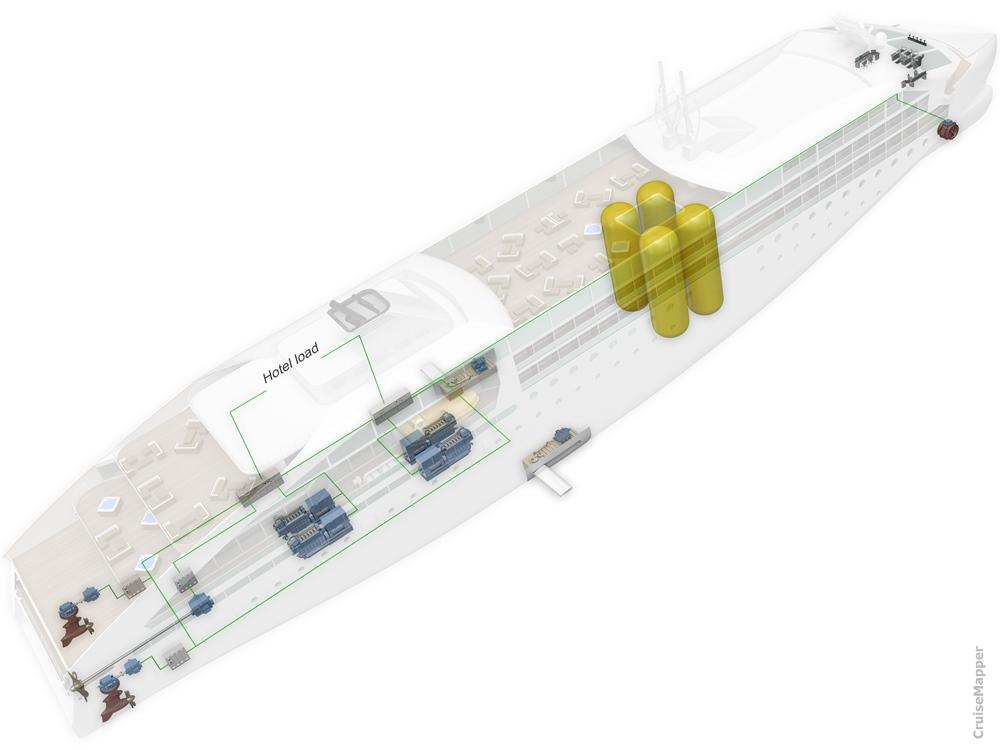
They carry power from generators to switchboards, through passageways, public rooms, crew and passenger cabins. If the electrical cables aren't truly redundant, even ships that feature two engine rooms suffer power failure. Hence, the power generation fuel requirements onboard cruises are almost 10 times a standard bulk carrier.

Eco-friendly Technology

10 Top Eco-Friendly Cruise Ships - Marine Insight

10 Top Eco-Friendly Cruise Ships.

Posted: Tue, 23 Jan 2024 08:00:00 GMT [source]

Larger cruise ships with higher passenger capacities typically consume more fuel due to their increased size, weight, and energy requirements. On the other hand, smaller vessels with fewer amenities and a lower passenger capacity may have lower fuel consumption rates. Aside from propulsion, cruise ships require a significant amount of power to operate various systems and facilities onboard.

Speed affects cruise ship fuel consumption because to go faster, vessels must increase the electricity flow to motors. Thus more engines are employed, and it, in turn, increases fuel consumption. For example, Queen Mary 2 consumes 237 tons MGO and 261 tons HFO a day when at full speed.

Through innovative technologies, operational efficiency, and regulatory compliance, the industry continues to evolve towards a more sustainable future. Magnifica has an average speed of 18 knots and a top speed of 22.90 knots. It also has an energy-saving and monitoring system for more environmentally friendly energy use, which reduces fuel consumption. In the case of the Queen Mary 2, the ship is huge at 1,132 feet long and a weight of 151,400 tons. This storied passenger liner is built for speed and is capable of a cruising speed of 29 knots and a top speed of 32.5 knots.

cruise ship fuel consumption

Mitigating Environmental Impact: Innovations in Cruise Ship Fuel Efficiency

This involves leveraging advanced technology systems and weather forecasting to plan routes that minimize fuel consumption while ensuring passenger comfort and safety. By taking advantage of weather patterns, currents, and other factors, ships can navigate the most optimal and fuel-efficient paths. Additionally, the passenger capacity of a cruise ship also affects fuel consumption. More passengers mean more weight to carry, resulting in increased energy requirements for propulsion. The number of passengers also impacts the energy demand for onboard facilities such as accommodations, dining areas, entertainment venues, and other amenities.

Technical Issue Cancels Two Port Visits for Norwegian Cruise Ship

Under such conditions, the consumption increases more than 40% of the eco speed performance. Diesel engines are the traditional type of engines used, but a diesel engine typically consumes a lot of fuel. Moreover, a larger vessel needs larger engines, which will consume more fuel. One of the most successful programs implemented on our ships is Wasted Heat Recovery (WHR). This process works by recovering heat from the engines and transferring it to freshwater piping, which allows us to utilize a free source of energy for improving water production and saving fuel.

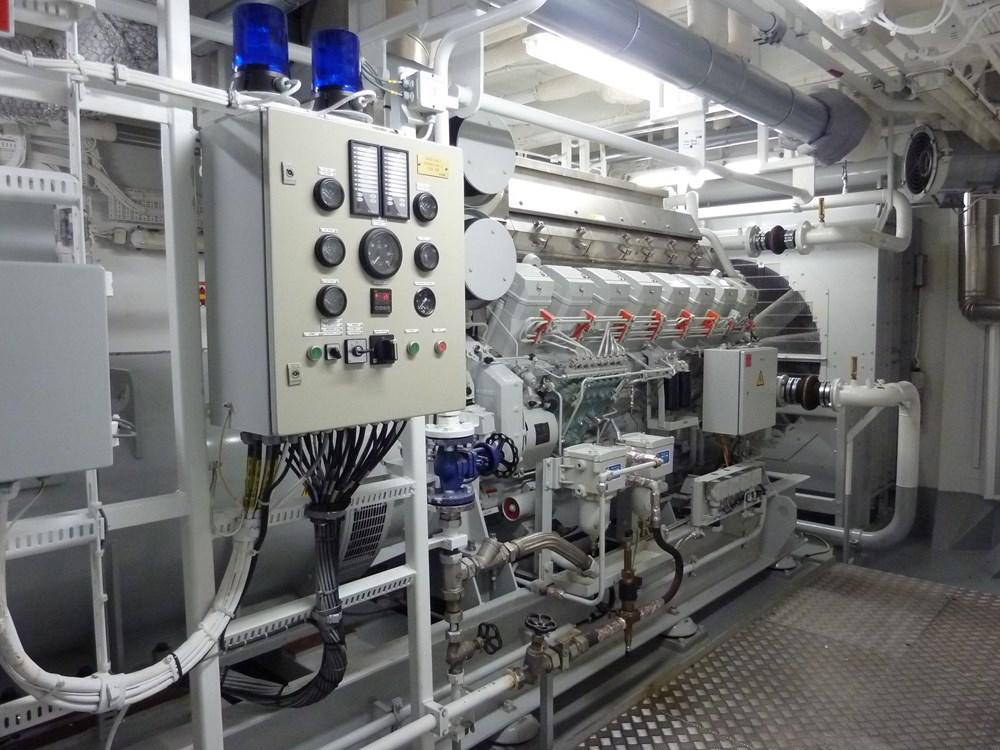
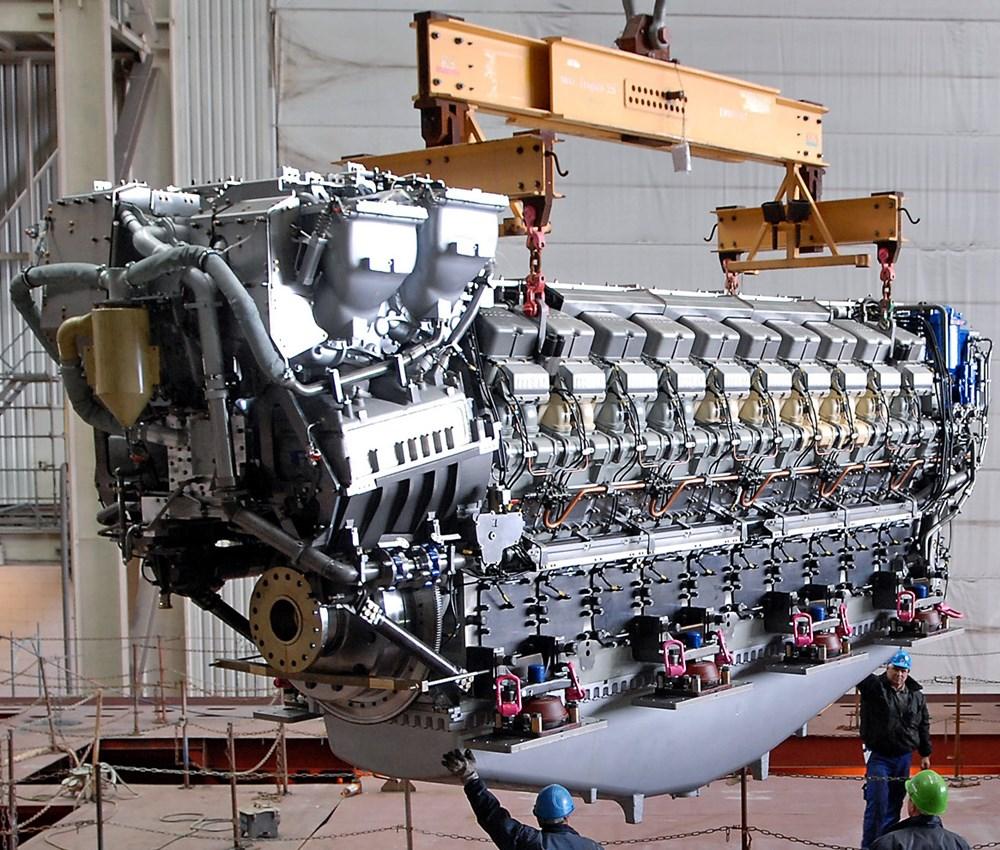
Without a source of power, these huge cruise vessels would be nothing more than drifting aimlessly hotels. A large number of older ships use diesel reciprocating engines for generating power for propulsion. Cruise ship engine power is supplied through the transmission to the propeller shafts. Modern ships use either diesel-electric engines or gas turbines as a source of power for propulsion, and for ship's systems. Some of the larger ships depend on two power sources - one for electrical power and one for propulsion. With such changing fuel consumption patterns, cruise ships use a high share of fuel in shipping.

These systems are essential to maintain a comfortable environment for passengers and crew, particularly in warm climates. Cruise operators employ advanced HVAC systems with energy-saving features, such as variable speed pumps and optimized temperature controls, to reduce power consumption while ensuring passenger comfort. As a ship moves faster through the water, the resistance encountered by the hull increases exponentially. The engines need to generate more power to overcome this resistance, leading to higher fuel consumption. Therefore, cruise operators often find a balance between maintaining a reasonable cruising speed to meet itineraries and minimizing fuel usage.

Cruise ships are not only floating luxury resorts, but they are also massive vessels that require significant amounts of fuel to power their engines and propel them through the water. This fuel consumption has far-reaching environmental consequences, including air and water pollution, greenhouse gas emissions, and the potential for oil spills. Alternative fuels, electrification, advanced energy management systems, and ongoing design and construction innovations will continue to improve fuel efficiency.

The new modular technology allows efficient and cost-effective custom-made systems to be built up from various existing and standard parts - mooring winches, anchor cable lifters, warping heads. Both self-unloading dry bulk vessels were China-built (by Chengxi Shipyard Co Ltd / subsidiary of CSSC) and scheduled for deliveries in 2021. RMS Queen Mary 2's four main diesel engines are above the keel, with two smaller gas turbines on top-deck (aft of the funnel).

The cruise industry continues to invest in research and development to explore innovative solutions for reducing fuel consumption and minimizing environmental impact. This includes advancements in battery technology, hydrogen fuel cells, and other renewable energy sources that have the potential to further enhance fuel efficiency and reduce emissions. While there is still progress to be made, these efforts represent a step towards a more sustainable future for cruise ships. The adoption of these fuel efficiency technologies demonstrates the cruise industry’s commitment to sustainability and reducing its carbon footprint.

The exterior appearance of cruise ships is a key factor in their ability to draw passengers. This limits the crew’s options for fuel storage and monitoring on board the ship. The safety of the passengers under operating circumstances is also accounted for by these factors. Although there are many different cruise ship size classifications, large ships are typically defined as those that can accommodate more than 2,500 passengers.

After considering the design and performance factors, the nature of propulsion is the next big step. The changing propulsion design and source decide how much fuel does a cruise ship use. Modern cruise vessels hit speeds of 22 to 24.5 knots during their international voyages regularly. This means their operation in the range of 85% load and above is quite frequent too.

In the electric propulsion systems, the main engine does not utilize any driving fuel. This lowers the consumption significantly in comparison to the standard diesel propulsion. The big sets of alternators produce the power that is useful to drive heavyweight electric motors. As mentioned, a large vessel needs a lot of fuel to power through the water and stay afloat. A small ship can get by on much less fuel while covering the same distance.

Monday, April 1, 2024

How Many Gallons Of Fuel Does A Cruise Ship Use

cruise ship fuel consumption

The fuel cost for the Oasis-class vessels is estimated to be around $300,000 per day. The speed at which a cruise ship travels also affects its fuel consumption. Ships that travel at higher speeds burn more fuel per hour than those that travel at slower speeds.

All-electric passenger ships

Collaboration among cruise lines, industry associations, and regulatory bodies will establish industry-wide standards and best practices, driving the industry’s commitment to sustainability. If you’ve ever thought about cruise ship fuel consumption, you likely have a lot of questions. Cruise ships are engineering marvels that complete incredible feats — like taking passengers from St. Maarten to Barcelona while they swim, dine and lazily watch the sea pass by. But while guests enjoy life onboard and its many pleasures, the crew keeps the ship fueled and powered behind the scenes. In this post, we’ll answer a few common questions about cruise ships and how much fuel they use.

I Spent 7 Days on My First Adults-Only Virgin Voyages Cruise

When a cruise ship is being designed, they consider how the water will affect the ship and consequently affect fuel consumption. In addition to these efforts, the cruise industry is actively participating in industry collaborations and sharing best practices to drive sustainability forward. It is worth noting that the transition to cleaner fuels and new technologies is a complex process that requires investment and infrastructure development. While many cruise lines are taking steps towards greener operations, there is still work to be done to achieve widespread adoption of cleaner and sustainable fuel options across the industry. According to Marine Insight, a large cruise ship of 1,000 feet in length uses over 200 metric tons of fuel per day. A medium size cruise ship, holding 1 million gallons of fuel, would take about 285 straight hours of fueling to be maxed out!

Hotels With Cruise Shuttles For Every Major Port in America

In general, a large cruise ship up to 1,100 feet in length can carry as much as two million gallons of fuel on board. For comparison, a private motor yacht between 40 and 60 feet only carries 200 to 1,200 gallons, while something massive like the Exxon Valdez carries up to 55 million gallons. All ship links redirect to the vessel's "itinerary-schedule-current position" page. On April 12, 2018, the VIKING LINE-owned ferry Viking Grace became the world's first-ever passenger ship equipped with a rotor sail utilizing wind power.

When sailing, the Spirit chugs along at an average speed of 24 knots and burns approximately 1,100 gallons per hour. Thus, with a fuel capacity of over 350,000 gallons, it can conceivably remain at sea for 12 days without refueling. TUI published the company's environmental impact report (first of its kind) including environmental objectives and TUI strategy for a 5-years period.

More passengers require more energy to maintain a comfortable and enjoyable experience for everyone onboard. Now that you know about cruise ship fuel consumption and how much fuel cruise ships hold, let’s talk about the reason for cruise ship fuel consumption to be so high. Weather conditions, such as wind, waves, and currents, can also affect a cruise ship’s gas consumption.

Cruise lines carefully calculate the fuel needed for each voyage based on the itinerary and plan accordingly to ensure they have enough fuel to reach their destinations. A cruise ship can typically travel for about twelve days without refueling, although most voyages last between 7 to 10 days, rarely requiring the ship to be at sea for its maximum fuel capacity duration. Cruise ships are increasingly using alternative fuels such as liquefied natural gas (LNG), hydrogen, methanol, and ammonia, aiming for 27-30% adoption by 2050 to achieve zero emissions targets.

cruise ship fuel consumption cruise ship fuel consumption

Most of the world's largest cruise ports have such dockside electrical hookups, reducing bad emissions by up to 95%. The power generated by the main engines/powerplant produces electricity that is used from the propulsion motors, as well as all auxiliary systems and hotel functions. This innovative maritime technology allows the engines to be started and stopped depending on the onboard electricity demand, which additionally improves fuel efficiency. The next photo shows Celebrity's Solstice-class ship propulsion (the 4 aft azipods, and the underwater hull shape).

What Influences Fuel Consumption on Cruise Ships?

More Silver Nova standouts, from asymmetry to 40% fuel efficiency gain to crew areas - Seatrade Cruise News

More Silver Nova standouts, from asymmetry to 40% fuel efficiency gain to crew areas.

Posted: Tue, 15 Aug 2023 07:00:00 GMT [source]

Cruise lines often analyze various factors, including wind patterns, tidal currents, and sea conditions, to determine the most fuel-efficient routes. Similarly to how your car consumes more fuel the faster it goes, cruise ships burn more fuel when they go fast. For example, an average-sized cruise ship may have engines with a power output of around 30,000 to 40,000 horsepower, while mega-ships can have engines with a power output exceeding 100,000 horsepower. The greater the engine power, the more fuel is required to generate that power, leading to higher gas consumption. A small number of ports around the world have installed infrastructure for cruise ships to connect to the onshore electrical power grid to supply much of the power needed when the ship is docked. This is known as Cold-Ironing, which can reduce emissions from a ship while docked.

It burns cleaner than its counterparts, significantly reducing emissions and making it a friendlier choice for our oceans and the air. Hopefully, you’ve learned more than what fuel cruise ships use and have started to think about the future of cruise line fuel. Liquified natural gas has emerged as a more environmentally friendly alternative energy source for cruise ships. If you’re an avid cruiser, have you ever thought about what type of fuel cruise ships use? With regard to storing bulk fuel, cruise ships have a bottom-heavy design. This explains the dynamic stability and also takes up less room for a larger passenger capacity.

The Promas Lite system (mentioned above) generates cruise ship fuel savings in the range of 5-15% depending on the operation type and the actual performance of the ship's existing propeller. Ship's powerplant includes 4x Wartsila engines (model 8L50DF, total power output 30,4 MW). Propulsion is diesel-electric (2x shafts with fixed-pitch propellers) and wind-assisted (with 1x rotor sail). LNG tanks are two (type C / vacuum insulated), each with capacity 200 m3 and weight 140 tons (LNG weight 85 tons per tank). Promas propulsion integrates propeller, hubcap, rudder bulb and the rudder into a single unit which can increase propulsion's efficiency by 3-8% (1-screw vessels) and by 2-6% (2-screw vessels). It also improves maneuverability, reduces fuel consumption and bad emissions.

Thankfully, cruise ships go through rigorous maintenance before and after trips which gives crew members and mechanics ample time to see that the tanks of cruise ships are full and ready to go. So, the next time you find yourself on a cruise, remember the incredible journey of fuel that powers your experience. It’s a reminder of the seamless blend of adventure and engineering, luxury and logistics, that makes cruising an unforgettable experience.

While at a port, a small bunker barge approaches the vessel’s side and delivers the right fuel. Cruise ships refuel by a small barge, which pumps around 110 tons of fuel per hour. A cruise ship with a 1 million ton fuel capacity requires nine hours to fully fuel.

Liquefied Natural Gas (LNG) is considered a green fuel for cruise ships. LNG stands out as a more environmentally friendly option for cruise ships compared to conventional fuels. Its cleaner-burning nature notably lessens greenhouse gas emissions, thereby substantially lowering its ecological footprint. Having journeyed on both cruise ships and observed cargo vessels, I’ve noticed their starkly different fuel consumption. Cruise ships focused on providing luxurious experiences, have high and varied power needs. They’re like floating 5-star hotels, requiring fuel for everything from lighting to air conditioning, far exceeding the demands of cargo ships.

Real-life Rapunzel claims longest hair record with stunning 8-ft locks

Table Of Content Rapunzel’s hair How Often Should You Cut Your Hair or Trim It to Keep It Healthy How Rapunzel’s Hair Got So Long Disney Pri...